The Shower Principle and Executive Dysfunction
If you have trouble with prioritizing, decision making, or figuring out what to do next, the shower principle might help.
The shower principle is an idea that inspiration and creative problem solving often strike when you are:
a) doing something that takes focus, but not your whole focus.
b) doing something physical with predictable sensory input.
(It’s also the name of a 30 Rock episode.)
I was discussing these three steps with a client today and thought I'd try putting this into writing after discussing it with so many people over the past few years.
One thing I see frequently in my executive function coaching practice is that people get stuck trying to force themselves through decision making, prioritization, or planning when their brain isn't ready to do those things yet. They sit in front of a to-do list, document, project, etc., and just go in circles.
This kind of executive dysfunction can show up for lots of different reasons. For someone with Attention-Deficit/Hyperactivity Disorder (ADHD), it might look like difficulty organizing information or maintaining the right level of stimulation to stay engaged in planning. An autistic person might need more predictability and processing time to make planning decisions. Someone with Obsessive Compulsive Disorder (OCD) may find themselves stuck in a loop trying to find the One Best Answer. Grief, burnout, chronic illness, and traumatic brain injuries (TBIs), can all affect executive functioning as well, making planning, prioritization, and task initiation much harder than they used to be.
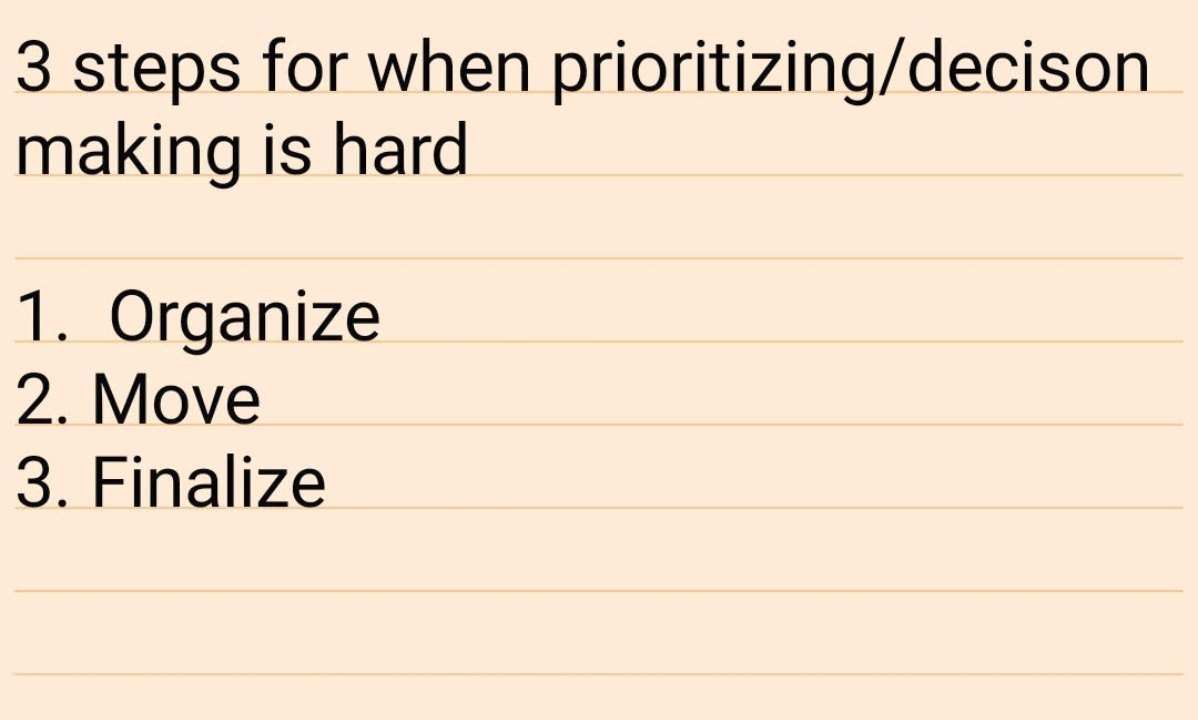
So, here is my 3-step-shower-principle-informed-strategy that helps make it easier to plan and prioritize!
Step 1: Spend 10-20 Minutes Organizing Your Information
Make a rough to-do list.
Write out your options.
Reread your document, or otherwise gather the information you need.
Don't try to do the steps that have been hard. Don't force yourself to prioritize. Don't try to make decisions.
You want to get the lay of the land, so look over things you have been avoiding, organize your information visually, and make a plan of how you want your information eventually organized (like make a rough to-do list or a post-it labeled 1. 2. 3. with nothing else written on it yet).
Step 2: Move Your Body
Take a walk.
Take a shower.
Do a quick workout.
Brush your hair.
Whatever.
Make an effort to focus on what your body is doing while allowing your brain to process the information you were just feeding it. Notice what thoughts and feelings come up around that information.
This is where the shower principle comes in. Sometimes our brains do their best processing when we're focused on something physical and predictable. Instead of staring directly at the problem and demanding an answer, give your mind some space to work in the background.
Step 3: Go Back and Decide
Go back to your list, document, project, or whatever you're working on and give yourself a short period of time (5-10 minutes?) to finalize your decisions, prioritize your work, or determine your next 1-3 steps.
If you are still stuck, check in with your basic needs. It’s hard to make decisions when we are hungry, tired, understimulated, overstimulated, etc. Take a break to meet your needs then try this again!
I've seen versions of this be helpful for everything from work projects, to household tasks, to bigger life decisions.
If you give this a try, let me know how it goes. If you want help trying this, email me for coaching!